
The Heritage and Craft of Tuak: A Technical Guide to Borneo’s Indigenous Rice Wine
Updated: May 13

Tuak, a traditional rice wine, represents a cornerstone of the cultural landscape in East Malaysia. Predominantly crafted by the indigenous communities of Sarawak and Sabah on the island of Borneo—such as the Iban, Bidayuh, and Kayan—this spirit is far more than a beverage. It is a symbol of heritage, community, and the ancestral customs that define the social fabric of the region. As the Malaysian beverage industry modernizes, tuak persists as a vital link to the past, providing a sensory narrative of the rituals, celebrations, and agricultural cycles of Borneo’s tribes.
Historical and Cultural Context
The history of tuak is inextricably linked to the agricultural cycles of Borneo. Rice, the primary staple crop, serves as the soul of the spirit. Historically, tuak was brewed for pivotal events: harvest festivals, weddings, and communal gatherings. It functions as a catalyst for social bonding and a traditional gesture of hospitality, traditionally offered to guests upon arrival as a sign of respect and welcome.
In cultural practices, tuak is central to the Gawai Dayak, the annual festival celebrating the end of the rice harvest. During these festivities, the consumption of tuak signifies gratitude for the earth's bounty. Beyond celebration, it holds a sacred role in rites of passage—including births, marriages, and funerals—acting as a medium between the living and the spirit world.
The Science of Ragi (Fermentation Starter)
The defining characteristic of tuak is the use of Ragi. In the context of traditional Malaysian fermentation, ragi refers to a starter culture composed of dried and powdered molds, yeasts, and lactic acid bacteria.
Its primary function is twofold:
Saccharification: The molds break down the complex starches in the glutinous rice into fermentable sugars.
Fermentation: The yeasts then convert those sugars into alcohol and carbon dioxide.
It is critical not to confuse this fermentation starter with "ragi" (finger millet) used in South Asian cuisine; in the context of East Malaysian brewing, it is strictly a microbial catalyst for rice wine.
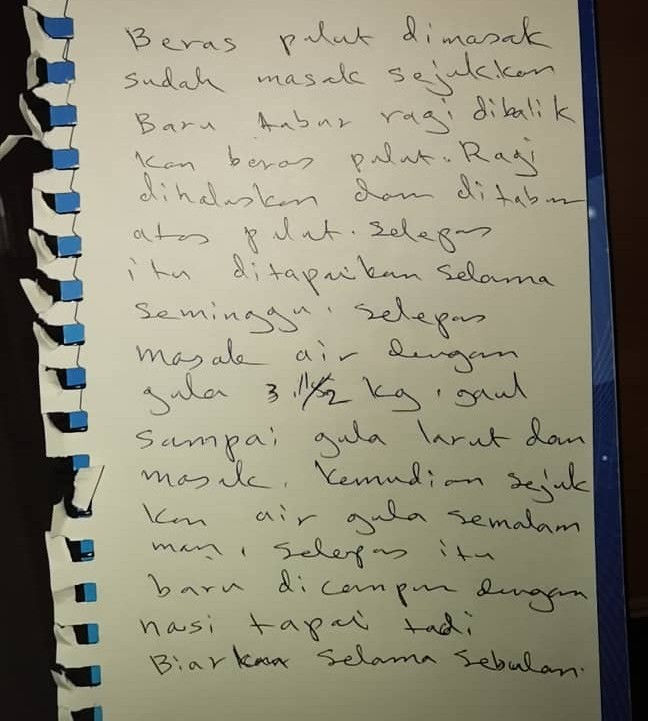
Professional Tuak Recipe: Sarawakian Tradition
This recipe follows the authentic proportions of a Sarawakian home-brew, designed for high-yield production typical of community celebrations.
Yield: Approximately 20–22 Liters
Preparation Time: 5 Weeks
Ingredients:
3.8 kg (134 oz) Glutinous Rice (approx. 16 cups)
300 g (10.5 oz) Ragi packs (10 packs of 30g each)
3 kg (105.8 oz) White Sugar
20,000 ml (676.3 oz) Filtered Water (for sugar solution)
2,800 ml (94.7 oz) Water (for cooking the rice)
Step-by-Step Preparation Procedure
Rice Preparation and Cooking
Wash the glutinous rice thoroughly until the water runs clear to remove excess surface starch.
Combine the rice with 2,800 ml (94.7 oz) of water in a large cooking pot.
Boil until the rice is fully cooked and has absorbed the water.
Spread the cooked rice onto a clean flat surface or plastic basin and allow it to cool completely to room temperature. Note: Mixing ragi into hot rice will kill the yeast.
Inoculation and Primary Fermentation
Crush the ragi packs into a fine powder.
Sprinkle the ragi evenly over the cooled rice.
Turn the rice over carefully and repeat the process to ensure every grain is coated with the starter culture.
Transfer the inoculated rice into a sterilized large jar or barrel.
Seal the container and store it in a cool, dark place for exactly 1 week.
Sugar Water Integration
After the initial week of dry fermentation, prepare the fortification liquid.
Dissolve 3 kg (105.8 oz) of sugar into 20,000 ml (676.3 oz) of water by bringing it to a boil.
Allow the sugar water to cool completely (ideally overnight) before proceeding.
Secondary Fermentation
Pour the cooled sugar water into the jar containing the fermented rice.
Stir gently to combine, then reseal the container.
Allow the mixture to ferment for an additional month in a stable, dark environment.
Filtration and Bottling
After 1 month, the liquid should be strained using a double strain technique or a fine muslin cloth to remove all solid rice residues.
Transfer the clear tuak into sterilized glass bottles.
The final product should have a shelf life of up to 3 months if kept in a cool environment.
Homemade ingredients should not only taste good during R&D. They need to survive real service.
The Bar-Ready Homemade Ingredients Masterclass teaches how to design, produce, store, test, and standardize homemade preps with better structure, shelf-life logic, SOPs, and quality control.
Tuak in Contemporary Mixology
In recent years, tuak has migrated from rural longhouses to the sophisticated cocktail bars of Kuala Lumpur and beyond. Mixologists value tuak for its unique profile: a creamy, slightly effervescent mouthfeel with floral, fruity, and acidic undertones.
When developing signature cocktails, tuak acts as an excellent modifier or base for lower-ABV drinks. Its natural acidity pairs exceptionally well with tropical ingredients like passion fruit, ginger, and homemade syrups.
Sustainability and the Future
Brewing tuak supports indigenous autonomy and sustainable agricultural practices. Many communities now focus on organic rice cultivation, ensuring the environmental impact remains minimal. By utilizing traditional Ingredients, the industry protects the cultural identity of East Malaysia while offering authentic experiences to a global audience.
Explore More in the Ingredients Section For deeper insights into traditional spirits and fermentation agents, visit our dedicated sections:
To learn about other unique components, browse the Ingredients section.
Discover how to use unique spirits in professional recipes in the Cocktails Section.
Stay Updated To receive technical updates on fermentation and bar management directly in your inbox: Subscribe to our Newsletter.
Written by: Riccardo Grechi | Head Mixologist, Bar Consultant & Trainer


Comments