
Rotavap in a Cocktail Bar: From Aroma to a Useful Ingredient
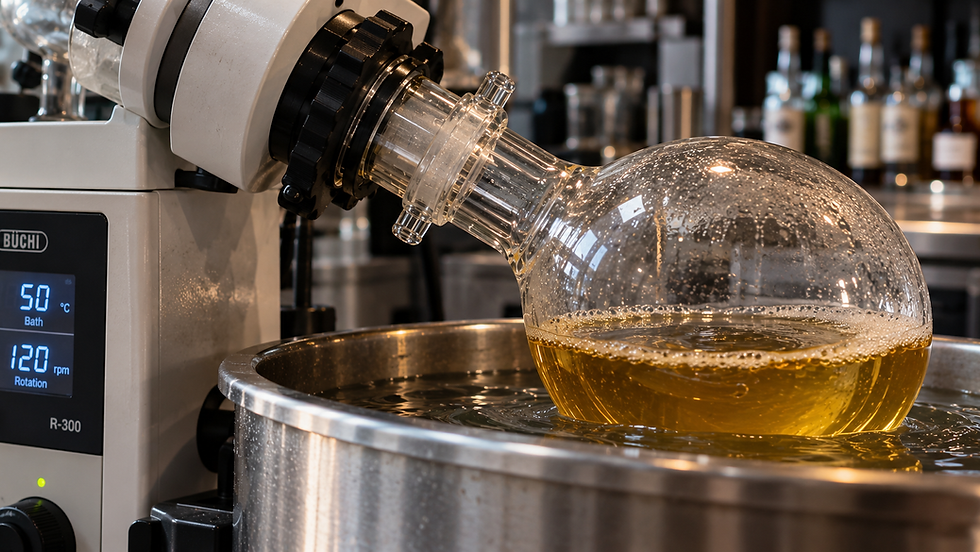
A colourless liquid with a vivid aroma is an attractive prospect for a bartender. A rotary evaporator can open possibilities that conventional preparations do not always offer, but an interesting output does not automatically make a better cocktail. The reason to use the machine has to survive beyond the first smell of the collected liquid.
Understanding a rotavap in a cocktail bar begins with a simple distinction: what evaporates and is collected is different from what remains in the flask. Either fraction may be the one the drink needs.
How a rotavap in a cocktail bar works
A rotary evaporator combines evaporation and condensation under reduced pressure. Reducing pressure allows a liquid to boil at a lower temperature than at atmospheric pressure, with the actual behaviour depending on the material and conditions.
The condensed vapour is the distillate. The material retained in the evaporation flask is the residue, which may be used as a reduction. These outputs can have different characteristics and applications, so a clear-looking distillate is not the inevitable goal of every run.
For a bar, the creative interest lies in how those fractions might contribute to a recipe: perhaps an aromatic modifier, perhaps a concentrated ingredient. The appearance of the output is only one part of its usefulness.
The machine is one possible route to flavour
An infusion, tincture or other suitable preparation may already deliver the character a drink requires. Rotary evaporation becomes more persuasive when it provides a specific benefit that the simpler approach does not.
That comparison includes the practical dose in a cocktail. A liquid can smell expressive in isolation yet contribute little at a usable quantity, or introduce a balance the recipe does not need. The equipment has value when the result makes sense in service.
The TDS homemade preparation guides and learning library place specialist equipment alongside the broader range of preparation methods.
Connect the output with the method
The Rotavap in a Cocktail Bar masterclass covers distillate, reduction and split-run decisions, with setup and the relationship between operating variables.
The result depends on more than a temperature
Pressure, heating, cooling and the properties of the input work together. A setting copied from another preparation cannot replace an appropriate procedure for the actual material and equipment.
Manufacturer guidance, compatible glassware and trained operation are essential to the process. Setup, shutdown and cleaning also belong in the workload, rather than being treated as minor details outside the creative run.
Alcoholic preparations bring requirements that depend on the activity and jurisdiction. Those need to be resolved for the venue before operation. Alcohol strength cannot be inferred reliably from appearance, aroma or the starting ingredient alone; output assessment requires a method suited to the sample.
An ingredient still has to become a drink
The distillate or reduction is a stage in development. Its role becomes clear beside the other ingredients, at the intended serving temperature and dose. A comparison with the existing preparation helps reveal what the new process actually adds.
There is an operational question as well. A successful run needs to lead to an ingredient that the team can identify, measure and use consistently. If every serve depends on a long verbal explanation, the process has not yet become a reliable part of the menu.
Where the deeper work begins
A rotavap offers possibilities, but choosing the right output, controlling the run and assessing the result take more than a promising flavour idea. Its place behind the bar depends on the relationship between equipment control and the cocktail it helps create.
Develop the complete run-to-service process
Continue with the full masterclass for its run records, calculations, troubleshooting and applied walkthrough, alongside the requirements of the actual equipment and venue.
More from The Double Strainer
Join TDS Premium for the in-depth article library on cocktails, techniques, homemade ingredients and bar operations. Masterclasses and downloadable toolkits are sold separately.
Written by: Riccardo Grechi | Beverage Manager, Bar Consultant & Trainer


Comments