
Cinnamon Syrup: Infusion vs Sous Vide, Which Method Works Best?

Cinnamon syrup looks simple, but it changes drinks fast. A small pour can add warmth, round sharp edges, and give a cocktail a more layered finish without turning the spec into dessert. The problem is consistency. Some batches taste bright and elegant. Others go muddy, woody, or flat. That usually comes down to method.
For bar work and home prep alike, the two most useful approaches are hot infusion and sous vide. One is easier and cheaper. The other gives tighter control and better repeatability. Here is the practical difference, and when each method makes more sense.
Beginner quick guide Cinnamon syrup is sugar, water, and cinnamon extracted into a sweet liquid. Hot infusion is the easiest starting point for most people. Sous vide is best when repeatability matters and equipment is available. Cassia tastes bolder. Ceylon is softer and more floral. Lightly cracking the sticks usually improves extraction. Refrigeration and clean bottles matter as much as the recipe.
Base recipe card: Cinnamon Syrup by Hot Infusion
Yield: about 330 to 360 ml
Time: 15 minutes active, 2 to 6 hours passive steeping
Technique: Hot infusion
Glassware: Clean glass bottle, jar, or squeeze bottle
Ingredients
240 ml water (8.0 oz)
240 g white sugar
10 g (3 to 4 cinnamon sticks, lightly cracked)
Optional: 1 strip orange peel, no bitter white pith
Method
Add the water and sugar to a saucepan over medium heat and stir until fully dissolved.
Add the cinnamon. Bring just to a gentle simmer, then remove from the heat.
Cover and steep for at least 2 hours. Taste after 2 hours, then every 30 to 60 minutes.
Strain, cool fully, bottle, label, and refrigerate.
Dilution and temperature notes
Do not boil hard. Fast evaporation changes sweetness and texture.
Cool before bottling to reduce condensation.
Tasting notes
Warm, woody, sweet, and gently dry on the finish.
Batching or prep notes
Write down the cinnamon type, steep time, and final yield.
Quick Brix notes
Technically, °Brix measures the concentration of dissolved solids in a liquid, expressed as grams of sucrose per 100 grams of solution. A syrup around 60 to 62 °Brix is generally dense enough to feel distinctly syrupy and offers better stability than a lighter bar syrup. That said, in cocktail practice the word syrup is often used more loosely, so many working syrups, especially 1:1 syrups, still sit below that range.
Ingredient substitutions and acceptable swaps
White sugar for a cleaner profile
Demerara for a darker profile
Cassia for more punch
Ceylon for a gentler result
Common mistakes and fixes
Too weak: Crack the sticks more, steep longer, or use more cinnamon.
Too bitter: Shorten the steep or reduce the cinnamon load.
Too cloudy: Fine strain again.
Too thick: Add a small measured amount of hot water.
Spoils early: Improve bottle hygiene and cold storage.
What cinnamon syrup actually does in a drink
Cinnamon syrup is not just a sweetener. It changes sweetness and aroma at the same time. In practice, that can soften aggressive acidity, broaden the mid-palate, and create warmth even in a cold drink.
That is why it works across very different styles. It suits aged spirits, citrus, apple, coffee, chocolate, and many tropical builds. It can also clash. If a drink only needs sweetness, cinnamon syrup can make it feel crowded.
Homemade ingredients should not only taste good during R&D. They need to survive real service.
The Bar-Ready Homemade Ingredients Masterclass teaches how to design, produce, store, test, and standardize homemade preps with better structure, shelf-life logic, SOPs, and quality control.
Method 1: Hot infusion
Hot infusion means dissolving sugar in water, adding cinnamon, then letting the spice steep while the liquid is warm. Some recipes simmer briefly first. Others dissolve the sugar, add cinnamon off heat, and wait longer. Both fit the same method family.
This is usually the best starting point. It is cheap, simple, and easy to adjust by taste.
Best reasons to choose hot infusion
No special equipment
Easy small batches
Fast setup and cleanup
Simple to taste and correct
Main trade-offs
More batch variation
Higher risk of evaporation
Less control than sous vide
Method 2: Sous vide
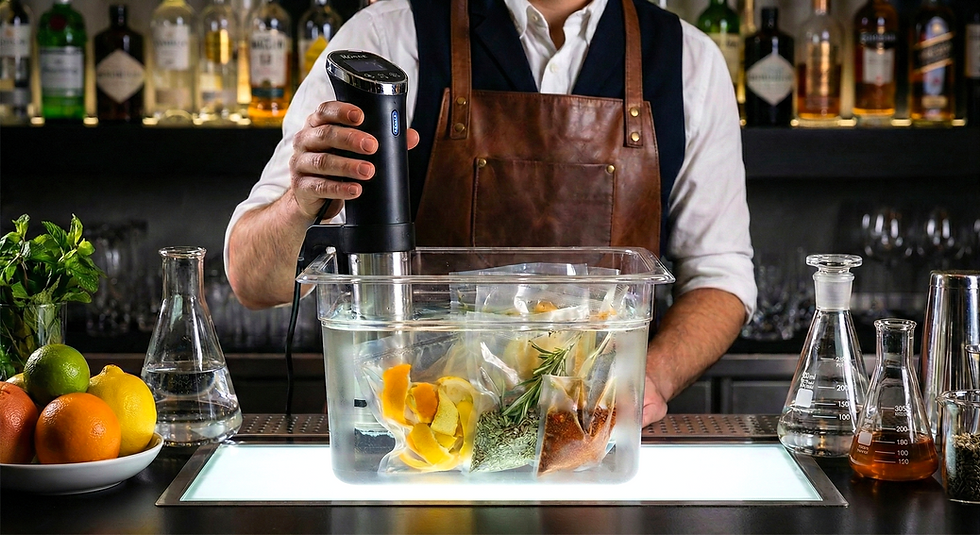
Sous vide is a method where ingredients are sealed in a bag or jar and held in a temperature-controlled water bath. For syrup, that means sugar, water, and cinnamon are heated gently at a fixed temperature for a set time.
The main advantage is control. Temperature stays stable, extraction is more repeatable, and random losses during the process are reduced. For bars that want the same result every prep day, that matters.
For cinnamon syrup, many modern sous vide guides work around 74°C / 165°F for about 2 to 4 hours. Lower temperatures can still work, but extraction is slower and usually more delicate.
Best reasons to choose sous vide
Better repeatability
Stronger process control
Easier to standardize once dialed in
Often a cleaner result
Main trade-offs
Requires equipment
Takes longer overall
Not always worth it for tiny batches
Infusion vs sous vide, side by side
Point | Hot infusion | Sous vide |
Equipment | Saucepan and strainer | Circulator plus sealed bag or jar |
Speed to start | Faster | Slower |
Control | Moderate | High |
Repeatability | Good if documented well | Usually better |
Evaporation risk | Higher | Lower |
Best use case | Small, quick batches | Standardized recurring prep |
If the goal is a quick, tasty syrup for service tomorrow, hot infusion is usually enough. If the goal is a locked spec that should taste nearly identical every time, sous vide has the edge.
Which cinnamon should you use?
Cassia is the bolder option. It tends to taste hotter, darker, and more direct. If the syrup needs to stand up to rum, whiskey, or heavier winter profiles, cassia often makes sense.
Ceylon is gentler. It usually tastes softer, more floral, and less aggressive. If the syrup is going into a lighter drink or a more delicate non-alcoholic build, Ceylon can feel more refined.
Whole sticks are usually easier to handle than ground cinnamon. Ground cinnamon can leave the syrup gritty and harder to strain cleanly.
Sugar choice and shelf life
White sugar gives the cleanest read on the cinnamon. Demerara adds body and a darker flavor. That can be excellent, but it changes the profile.
For shelf life, small refrigerated batches are the safer habit. Exact hold time varies with sugar concentration, bottle hygiene, and storage temperature, but a practical consensus for 1:1 style syrups is roughly 2 to 4 weeks in the fridge. Richer syrups may last longer. Date the bottle, and discard anything cloudy, fizzy, or moldy.
Quick service test
Make the same drink twice with the same base spirit, citrus, and dilution, then change only the syrup. That is the easiest way to compare the methods fairly.
A hot infusion batch may feel slightly broader and more familiar. A sous vide batch may feel tighter and more consistent. Neither outcome is automatic. Cinnamon type, steep time, sugar choice, and final dilution still matter.
If you want to go deeper, explore the Ingredients section and the Techniques section for more service-ready prep guidance.
FAQ
Is cinnamon syrup better with white sugar or demerara?
White sugar is usually better if the goal is a cleaner cinnamon profile. Demerara works well when a darker syrup is wanted.
Can ground cinnamon be used instead of sticks?
It can, but it is usually less clean. Ground cinnamon makes straining harder and can leave sediment.
Is sous vide always better than infusion?
No. Sous vide is usually better for control and repeatability. Hot infusion is often better for speed and simplicity.
How strong should cinnamon syrup taste?
Strong enough to clearly read in a finished drink. If it disappears in a sour, it is too weak.
Can orange peel be added?
Yes, but keep it controlled. Too much peel can push the syrup away from cinnamon.
Can cinnamon syrup be frozen?
Yes, in small portions. Shake well after thawing and test before service.
Glossary
Infusion: Extraction of flavor from an ingredient into a liquid over time.
Sous vide: A method that uses a controlled water bath to hold sealed ingredients at a set temperature.
Steep: To let an ingredient sit in liquid so flavor moves into that liquid.
Extraction: The process of pulling flavor and aroma from an ingredient.
Reduction: Loss of water through evaporation, which makes syrup thicker.
Final yield: The actual amount of syrup left at the end.
For more homemade sweeteners, syrups, and prep ideas that actually hold up in service, explore the Ingredients section.
Join The Double Strainer Newsletter and get the free Bar Essentials guide.Practical tools for better prep, smarter batching, and cleaner service.
Written by: Riccardo Grechi | Beverage Manager, Bar Consultant & Trainer


Comments