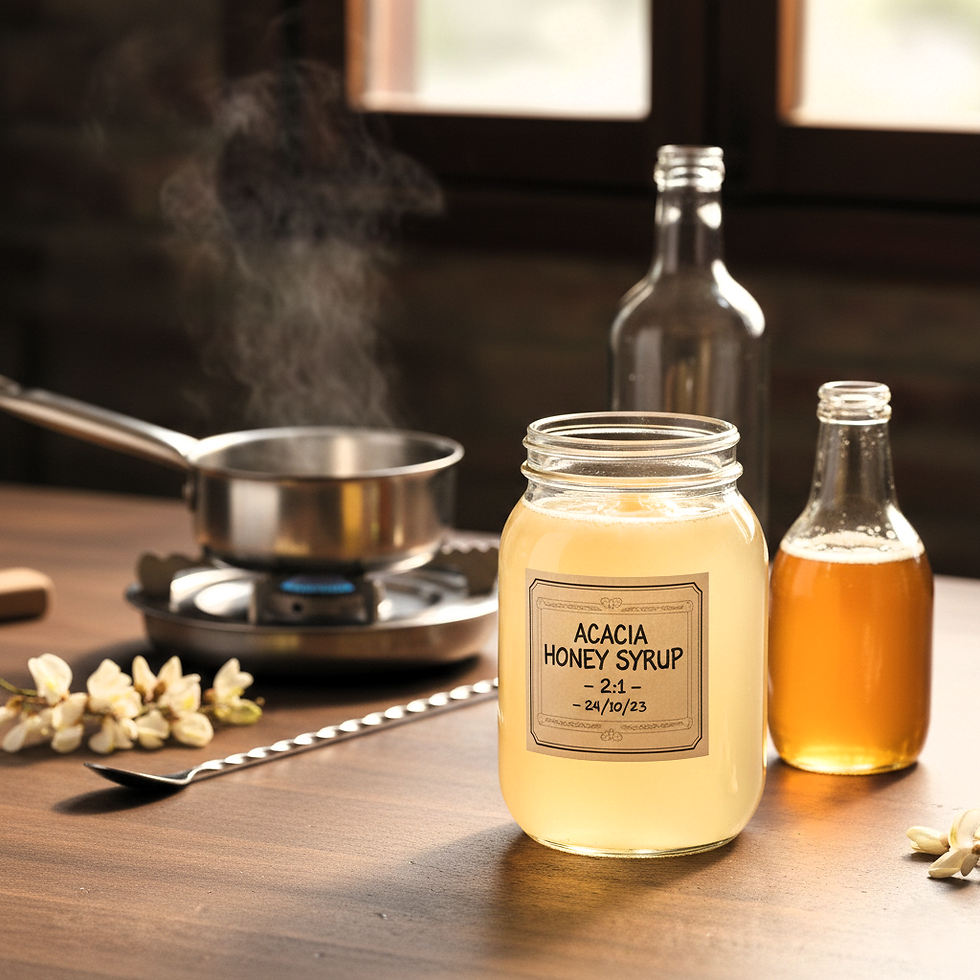
Honey: A Study of Flavor, Texture, and Terroir
Updated: Oct 25

Honey is not just “sweetness.” It is a botanical ingredient that carries aroma, acidity, texture, and terroir, and it behaves differently from sugar in a shaker tin. For bartending and mixology newcomers, honey can feel unpredictable because it is viscous, variable by origin, and prone to crystallization.
This guide explains what honey is, the main types found in the market, how to choose the right style for cocktails, and how to turn it into a consistent, service-ready syrup. It also includes practical pairing rules, do’s and don’ts, and troubleshooting for the most common problems.
What honey is (in practical terms)
Honey is a natural sweet substance produced by bees, made by transforming nectar and reducing its water content. Standards describe honey as consisting essentially of sugars, predominantly fructose and glucose, alongside minor compounds such as organic acids, enzymes, and particles derived from collection.
For cocktail work, three properties matter most:
Sweetness plus aroma: honey delivers floral, waxy, herbal, spicy, or resinous notes depending on botanical source.
Viscosity and mouthfeel: honey adds body and a rounder texture than simple syrup at comparable sweetness.
Acidity and stability: honey is naturally acidic (often reported in the pH range roughly 3.4–6.1), which affects balance and perception in sours and highballs.
Want to read more?
Subscribe to thedoublestrainer.com to keep reading this exclusive post.