
Acacia Honey Syrup (2:1): Fast Bar Prep for Balanced Drinks
- Oct 24, 2024
- 3 min read
Updated: May 13
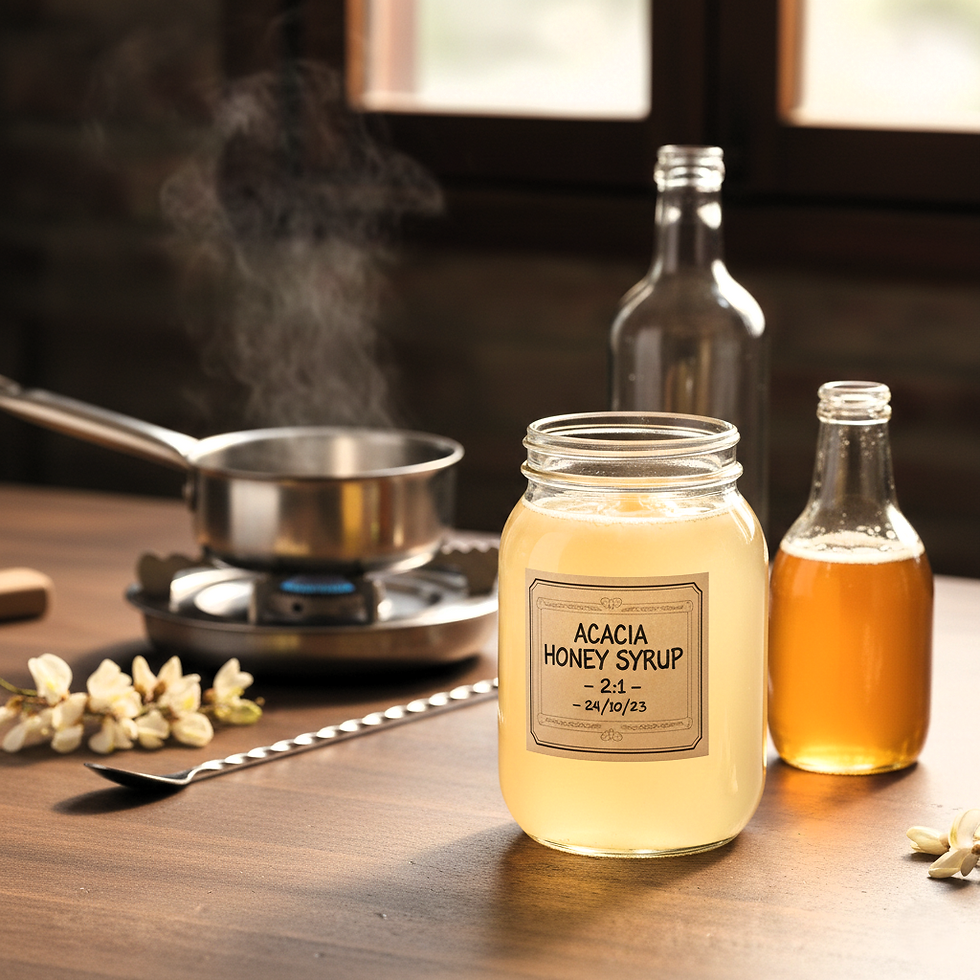
Acacia honey is one of the most useful “quiet” sweeteners behind a modern bar. It sweetens without taking over, which is exactly what you want when working with delicate botanicals like gin, light florals, or subtle citrus builds.
What is acacia honey
Acacia honey is produced from the nectar of the black locust tree (Robinia pseudoacacia), often sold as “acacia” in Europe even though the plant is technically black locust.
Flavour profile
Expect a mild sweetness, light floral aroma, and a clean finish. Visually it is typically pale and can look almost transparent compared to darker varieties. In texture, it tends to stay smooth and runny.
Why bartenders like it
Acacia honey is a “supporting actor” sweetener. It builds roundness and aroma without masking base spirits.
Practical upside: it tends to crystallize slowly, largely because acacia honeys commonly have a higher fructose-to-glucose balance than many other varietals.
Acacia vs other honeys (simple, useful comparison)
If you want better control in cocktail flavour design, choose honey like you choose bitters: intentionally.
Acacia: mild, floral, soft, great with gin or vodka and bright sours
Clover: clean and versatile, easy “default” honey
Wildflower: variable, can add terroir and seasonality, less predictable
Buckwheat or chestnut: intense, earthy or tannic, better with aged spirits, stirred drinks, smoky builds
Orange blossom: citrus-floral, naturally fits citrus-forward builds and tequila
Want the full breakdown of honey types, flavour profiles, and when to use each one in cocktails? Read the complete guide: Honey Types Explained
The bartender note
Different honeys create different cocktails, even when the spec is identical. Decide the result first (clean and floral, deep and earthy, citrus-forward, etc.), then choose the honey that supports that target.
Also, calling out the honey type on your menu is an easy detail that signals craft, and it gives guests a clear story without adding complexity.
Acacia Honey Syrup (2:1)
A syrup is the professional way to use honey in cocktails. It mixes fast, measures consistently, and reduces “sticking” or uneven sweetness.
Time needed
5 minutes
Tools
Glass jar or bottle (sterilized)
Saucepan + heat source
Barspoon (or spoon)
Funnel (optional)
Ingredients
1 part filtered water
2 parts pure raw acacia honey
Example batch (easy to scale):
100 g water
200 g acacia honey
Method
Heat the water until it is almost boiling (do not boil aggressively).
Pour the hot water over the honey and stir until fully dissolved.
Bottle while still hot.
Label (date + ratio), cool to room temperature, then store in the fridge.
Shelf life
Up to 1 month refrigerated, assuming clean tools and a sterilized bottle.
Safety note: like all honey products, do not give honey to infants under 12 months.
Writer Notes
Treat honey like a flavour ingredient, not “just sweetness.” Pick the varietal deliberately.
If a cocktail feels heavy or muted, the fix is often not less syrup. It is usually more acidity, or a lighter honey choice.
For team consistency, label the bottle clearly and keep the ratio fixed across batches.
Homemade ingredients should not only taste good during R&D. They need to survive real service.
The Bar-Ready Homemade Ingredients Masterclass teaches how to design, produce, store, test, and standardize homemade preps with better structure, shelf-life logic, SOPs, and quality control.
Written by: Riccardo Grechi - Head Mixologist | Founder of The Double Strainer
For more articles about homemade ingredients, visit the Homemade Ingredients section.
Join The Double Strainer Newsletter and get the free Bar Essentials guide.
Practical tools for better prep, smarter batching, and cleaner service.


Comments