
Have You Ever Heard of Bahia? A Piña Colada Evolution

The Bahia Cocktail lives in the same sunny neighborhood as the Piña Colada, but it usually shows a little more structure and a little more intent. Pineapple and coconut still lead the profile, but the drink often feels less like a dessert and more like a proper rum cocktail.
That matters because Bahia recipes are not perfectly standardized across sources. Some versions are softer and sweeter. Others lean more heavily on rum character, especially with a Overproof Jamaican rum component. So the useful question is not whether one recipe is the only correct one. The useful question is how to build a Bahia that tastes balanced, cold, and unmistakably tropical.
Beginner quick guide
The Bahia is a tropical rum cocktail built around pineapple and coconut.
It is closely related to the Piña Colada, but it is less tightly standardized.
A practical modern version should be cold, creamy, and still clearly taste of rum.
Cream of coconut is sweetened. Coconut cream is not. That difference matters.
Fresh pineapple juice usually gives the brightest result.
Crushed ice helps texture, chill, and dilution.
A small amount of lime is optional, but often improves balance.
This drink should be served immediately. It does not improve while sitting around.
Bahia Cocktail recipe
Yield: 1 drink
Time: 3 to 4 minutes
Technique: Flash blend or short hard shake
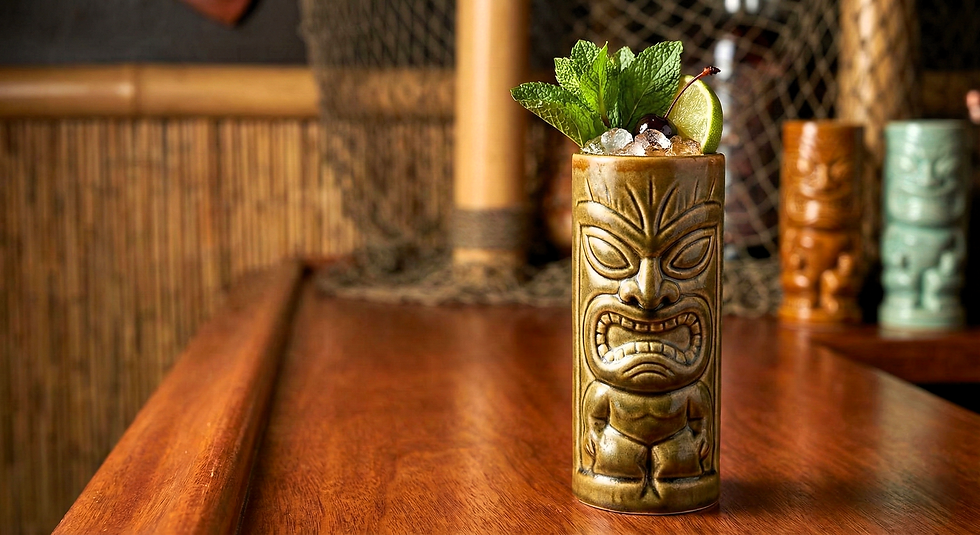
Glassware: Tall chilled glass, pilsner, or tropical mug
Ingredients
45 ml light rum (1 1/2 oz)
15 ml Overproof Jamaican rum (1/2 oz)
75 ml pineapple juice (2 1/2 oz)
22.5 ml cream of coconut (3/4 oz)
15 ml fresh lime juice (1/2 oz)
Crushed ice
Method
Add all liquid ingredients to a shaker tin or drink mixer.
Add a generous scoop of crushed ice.
Flash blend for about 8 to 10 seconds, or shake hard for 12 to 15 seconds.
Dump into a chilled tall glass.
Top with a little more crushed ice if needed.
Garnish and serve immediately.
Garnish standard
Mint sprig, pineapple wedge, and an optional maraschino cherry.
Dilution and temperature notes
Dilution is the water added by melting ice during mixing. Here it is part of the recipe, not an accident. The Bahia should arrive very cold, lightly aerated, and soft in texture. If it tastes dense or sticky, it usually needs a touch more dilution. If it feels washed out, it was blended or shaken too long.
Tasting notes
A good Bahia opens with pineapple, follows with coconut, and finishes with rum still clearly present. It should feel bright and creamy, not cloying.
Batching or prep notes
Pre-batch the liquid ingredients for the same day and keep them refrigerated. Add ice and texture only at service. Full advance dilution is usually a poor choice because the drink loses freshness quickly.
Ingredient substitutions and acceptable swaps
No Overproof Jamaican rum: use 60 ml total light rum (2 oz)
No cream of coconut: use unsweetened coconut cream plus 7.5 to 10 ml rich simple syrup (1/4 to 1/3 oz), then taste and adjust
No fresh pineapple juice: use a good chilled packaged juice, but expect a rounder and slightly flatter result
No lime: the drink can still work, but it will read sweeter
Common mistakes and fixes
Using coconut cream instead of cream of coconut: the drink tastes drier and less integrated. Add syrup carefully or use the correct product.
Using too much cream of coconut: sweetness jumps too far forward. Reduce it slightly or add the lime.
Weak rum presence: increase the Overproof Jamaican rum slightly or choose a more characterful, funky, base rum.
Warm service: chill the glass and work fast. Tropical drinks fade quickly when left to sit.
Over-blending: the drink turns thin and sloppy. Blend briefly, not endlessly.
Flat pineapple flavor: use fresher juice or colder juice.
Turn This Rum Cocktail Into a Service-Ready Serve
A great rum cocktail is not only about flavour: it must also be prepared with precision, consistency and control behind the bar. Learn how to move from recipe to guest with a clear professional workflow in the Recipe-to-Guest Masterclass.
What is a Bahia Cocktail?
The safest definition is simple: the Bahia is a rum, pineapple, and coconut cocktail in the Piña Colada family, usually served very cold with crushed ice or a blended texture. What changes from source to source is the exact rum split, the coconut product, and whether a small amount of citrus is used.
That variability is not a flaw. It just means the drink behaves more like a family of close house specs than a single locked formula.
Brief historical note
The history is shorter than many readers expect, and it is better to keep it honest. The strongest readily verifiable printed recipe located for this article appears in the revised 1972 edition of Trader Vic’s Bartender’s Guide. Current Trader Vic materials also describe Bahia as their Piña Colada-style variation, explaining that the name was used because their version omitted heavy cream and referenced the Bahía de San Juan. So the safest attribution is not a perfectly documented single-inventor story, but a Trader Vic lineage tied to the tropical restaurant-bar tradition of the mid-20th century.
In plain language, this is a cocktail with credible Trader Vic roots, but not one with a fully neat origin file sitting out in the open.
The ingredients that matter most
Rum
Rum is the backbone. A split base, meaning two different rums used together, often gives the best result. Light rum keeps the drink clean and approachable. Overproof Jamaican rum adds aromatic lift, a little funk, and more shape on the finish.
Pineapple juice
Pineapple is doing more than adding sweetness. It also gives acidity, body, and some natural froth. Fresh juice generally tastes brighter and less sticky. Packaged juice can work, but some versions are noticeably sweeter.
Cream of coconut
This is the ingredient most likely to cause confusion. Cream of coconut is sweetened and designed for tropical drinks and desserts. Coconut cream is a richer unsweetened coconut product. They are related, but not interchangeable one-for-one unless you adjust sweetness.
For more ingredient breakdowns and substitution logic, the Ingredients section is the most useful next stop.
Lime juice
Not every Bahia recipe uses lime, but a little can help cut through sweetness and sharpen the finish. It is especially useful when pineapple juice is very ripe or the cream of coconut is particularly rich.
How to keep the drink balanced
This is not a cocktail that rewards lazy temperature control. Cold ingredients, crushed ice, and disciplined mix time make a visible difference.
A short flash blend gives the smoothest texture. A hard shake with crushed ice gives a slightly livelier and fresher version. Neither method is inherently superior. The better choice depends on whether the goal is soft tropical texture or a slightly leaner bar-service feel.
The key point is balance. Too little dilution and the drink feels thick, hot, and sweet. Too much dilution and it loses definition.
For more on dilution, shaking, and service mechanics, the Techniques section is worth reading.
Bahia vs Piña Colada
This is the comparison that helps most beginners.
A Piña Colada has a more familiar and more standardized identity. The Bahia sits very close to it, but often reads a little more rum-forward and a little less creamy in the dessert sense. Trader Vic’s own current storytelling also frames Bahia as its Piña Colada-style variation rather than a completely unrelated tropical drink.
So if the Piña Colada is the rounder and more universally recognized template, the Bahia often feels like the version with slightly more backbone.
FAQ
Is Bahia an official classic cocktail?
It is a recognized tropical cocktail name, but it is not standardized as tightly as drinks like the Daiquiri or Negroni.
Who invented the Bahia Cocktail?
The safest answer is that the drink belongs to the Trader Vic lineage. A readily verifiable printed recipe appears in the revised 1972 Trader Vic’s Bartender’s Guide, but the public evidence does not support a perfectly detailed single-day origin story.
Is Bahia just another name for Piña Colada?
No, but they are very close relatives. Bahia is best treated as a variation in the same flavor family.
Does it need to be blended?
No. Blending is common, but a short hard shake with crushed ice can work very well.
Can dark rum be used?
Yes, in moderation. A small split with a more aromatic rum is usually better than making the whole drink dark and heavy.
Can it be made without lime?
Yes. It will simply drink sweeter and softer.
Glossary
Cream of coconut
A sweetened coconut product used in tropical drinks and desserts.
Coconut cream
A richer unsweetened coconut product with higher fat content.
Dilution
The water added by melting ice during mixing.
Flash blend
A very short blend with ice to chill, aerate, and lightly dilute a cocktail.
Split base
Using two different base spirits, or two rums, in one drink.
For more tropical builds, classic specs, and service-focused cocktail guidance, explore the Classic Cocktails section.
Join The Double Strainer Newsletter and get the free Bar Essentials guide.
Practical tools for better prep, smarter batching, and cleaner service.
Written by: Riccardo Grechi | Head Mixologist, Bar Consultant & Trainer


Comments