
Tinctures in Cocktails: The Art of Infusing Flavor and Aroma
Updated: May 13

Quick Definition: What It Is
A cocktail tincture is a highly concentrated alcohol extract made by steeping botanicals such as herbs, spices, citrus peel, flowers, or fruit in a spirit. The alcohol pulls aromatic and flavor compounds into a liquid that can be used in tiny quantities, often just drops, to fine-tune a drink without changing its structure.
Tinctures sit in the same family of techniques as infusions and bitters, but the practical goal is different: tinctures are built for micro-dosing, precision, and repeatability.
Why It Matters (for bartenders and drinkers)
Precision without dilution: A tincture can add aroma and flavor intensity with minimal volume, which helps maintain the intended texture and balance.
Repeatable results: When a bar needs consistency across service, tinctures offer a controlled way to “lock in” a specific top note or spice accent.
Fast iteration in R&D: Instead of reformulating a whole spec, a few drops can test whether a cocktail benefits from herbal lift, spice warmth, or brighter citrus aroma.
Key Elements (Ingredients and Components)
Base alcohol (the solvent)
Neutral spirits are common for clean extraction, but rum, gin, or whiskey can be used when the tincture should match the drink’s base.
Botanicals (the flavor source)
Fresh or dried herbs, spices, citrus peel, flowers, roots, cacao, coffee, and other aromatics.
Container and sealing
A clean glass jar with a tight lid for steeping.
Filtration
Fine mesh, coffee filter, or cheesecloth to remove solids.
Dispensing
Dropper bottles help control dosage and support consistent builds during service.
How It Works: Extraction Methods
Classic steeping method
Botanicals are submerged in alcohol and left to steep. Over time, the alcohol extracts aromatic compounds, pigments, and flavor. The liquid is then strained and bottled.
Time is not a fixed rule. Some tinctures become expressive in days, while others benefit from longer steeping. Taste and aroma checks should drive the decision.
Sous vide fast-track method
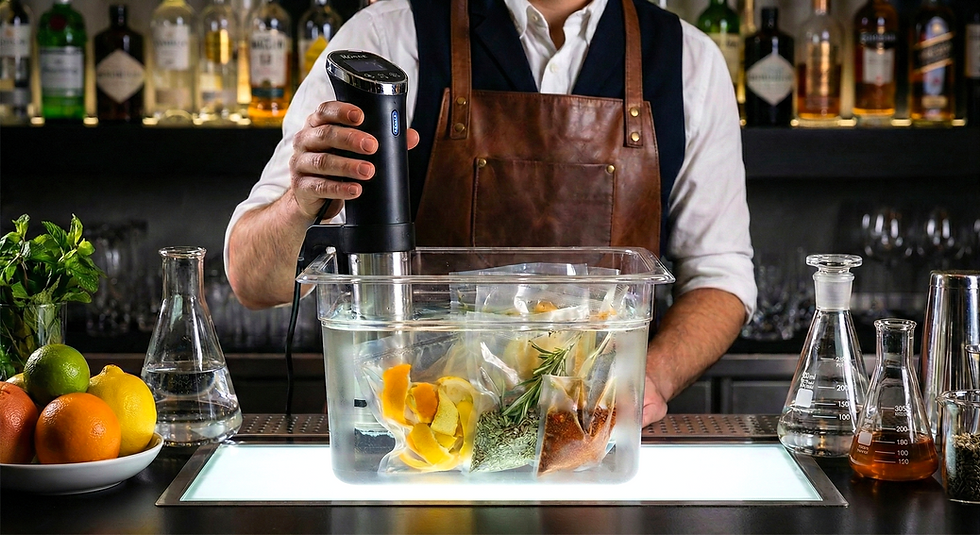
Sous vide can speed extraction by keeping the infusion at a stable, gentle temperature. This approach is typically best for heat-stable ingredients such as spices, dried herbs, citrus peel, cacao, and coffee.
How to Make a Simple Cocktail Tincture
Recipe Card
Yield: 1 batch (variable, based on jar size)
Prep time: 10 minutes
Method: steep (classic) or sous vide (optional)
Ingredients
High-proof alcohol (for example, a neutral spirit; strength varies by preference and ingredient)
Fresh or dried botanicals (herbs, spices, citrus peel, flowers, fruit)
Glass jar with tight-fitting lid
Fine mesh strainer or cheesecloth
Dropper bottle or small vial for storage
Basic Method (Classic)
Prepare the botanicals
Fresh: lightly chop, bruise, or muddle to expose oils.
Dried: use as-is or lightly crush for more surface area.
Fill the jar: Add botanicals, then cover fully with alcohol.
Steep: Seal and store in a cool, dark place. Shake gently once per day. Steep time can range from 3–14 days depending on intensity. Taste and smell periodically.
Strain: Filter through fine mesh or cheesecloth (repeat if needed for clarity).
Bottle and label: Transfer to dropper bottles. Label with contents and date.
Alternative Method (Sous Vide Fast-Track)
Place botanicals and alcohol in a vacuum-sealed bag or heat-safe jar.
Set the bath to 50–60°C (122–140°F).
Infuse for 1–4 hours, depending on the ingredient.
Cool, strain, bottle, and label.
How Tinctures Are Used in Cocktails
1) Flavor enhancement
A few drops can add a clear note that would be too aggressive if added as a syrup, puree, or full infusion. Example: lavender on a gin drink, or citrus peel brightness on darker spirits.
2) Aromatic additions
Tinctures can be used to lift aroma at the glass, especially with herbaceous ingredients such as rosemary, thyme, basil, or mint.
3) Balancing flavors
A spice or herbal tincture can counterweight sweetness or add definition to rich builds, without pushing volume or acidity.
4) Color and visual appeal
Some tinctures carry strong color, which can add subtle visual character. This is usually most noticeable when tinctures are used in surface applications (drops on foam) rather than fully mixed through.
Homemade ingredients should not only taste good during R&D. They need to survive real service.
The Bar-Ready Homemade Ingredients Masterclass teaches how to design, produce, store, test, and standardize homemade preps with better structure, shelf-life logic, SOPs, and quality control.
Types of Tinctures (Common Categories)
Herbaceous: basil, thyme, rosemary, mint
Spice: cinnamon, clove, cardamom, chili
Citrus: lemon, orange, grapefruit, lime peel
Floral: lavender, hibiscus, rose, jasmine
Fruit: berries, apple, peach
Bitters-adjacent: Many bitters are produced via alcohol infusion, but “bitters” typically implies bittering agents and a specific seasoning role in cocktails.
Common Mistakes
Over-extraction: leaving botanicals too long and pulling harshness or muddiness.
Poor filtration: solids and fine sediment continue to affect flavor and clarity.
No labeling: unmarked bottles quickly become unusable in a professional setting.
Uncalibrated dosing: “drops” and “dashes” vary by bottle and speed of pour, which can create inconsistency.
Mismatch with the drink: using a strongly flavored base spirit for extraction when a neutral profile is needed.
Pro Tips: Professional Notes
Start small, then scale. Small test batches reduce waste and speed iteration.
Taste to a target. Stop steeping when the tincture delivers a clear, single message.
Standardize the dispense. Use droppers and document a house standard (example: X drops for a specific drink).
Use tinctures to finish. For aroma-forward ingredients, surface drops on foam can outperform fully integrated mixing.
Keep the role narrow. Tinctures work best as accents, not as the main flavor engine.
Variations and Substitutions
Neutral vs character spirit: neutral spirit keeps flavors isolated; a matching base spirit can make integration smoother.
Fresh vs dried botanicals: dried ingredients can be more consistent; fresh ingredients can be brighter but less predictable.
Room temperature vs sous vide: classic steeping is simple; sous vide compresses time when faster turnaround is needed.
FAQ
Are tinctures the same as bitters?
Not exactly. Both are alcohol-based extracts, but bitters typically include bittering agents and are designed as cocktail seasoning, while tinctures often target a single note for micro-dosing.
How strong should the alcohol be?
Stronger alcohol often extracts faster and can pull different aromatic compounds, but the ideal strength depends on the ingredient and the intended flavor.
How long should a tincture steep?
There is no universal time. Some cocktail tinctures can be ready in days; others benefit from longer steeping. Regular tasting is the most reliable control.
How many drops should be used in a drink?
Start with a minimal dose, then increase gradually. Drop size varies by dropper and liquid viscosity, so standardization matters more than a universal number.
Can tinctures be used in zero-alcohol drinks?
They can change the “zero” status because they are alcohol-based. If that matters, consider non-alcoholic alternatives or use other aromatic techniques.
Why use sous vide for tinctures?
A stable, gentle temperature can speed extraction and improve repeatability, especially for heat-stable botanicals.
Do tinctures expire?
High alcohol content generally preserves extracts well, but aroma can fade over time. Labeling and rotation keep quality consistent.
What is the easiest tincture to start with?
Citrus peel or black pepper are common first tests because they show clear results quickly and work across many base spirits.
Do you want to learn more about techniques, cocktails, homemade ingredients, and other bar topics through personalised, live bartending and mixology training?
Explore The Double Strainer’s Bartending and Mixology Training, with customised courses now available for individuals, teams, and venues.
Explore more prep and infusion methods in the Homemade section
Get new techniques and recipes via Newsletter
Written by: Riccardo Grechi | Head Mixologist, Bar Consultant & Trainer.


Comments