
What Is the Mint-Washing Technique?
Updated: May 13

Mint can make a cocktail feel brighter, fresher, and more polished. It can also become messy, bitter, and inconsistent when it is handled badly. That is why the mint washing technique matters.
In bartending, mint washing is a prep method used to move mint aroma and flavor into a liquid before service, instead of relying only on fresh muddled mint in the final build. Done well, it creates cleaner flavor, smoother texture, and more consistent drinks. It also makes service faster, which is one of the main reasons it has become useful in modern bar prep.
The term is still used a little loosely across the industry. Some bars use it to describe a cold mint extraction into a spirit. Others use it for a mint oleo-style prep, where sugar helps pull aroma from the leaves before alcohol is added. The common idea is simple: extract mint in a controlled way so the final drink keeps the freshness of mint without the common problems of over-muddling.
Beginner quick guide
Mint washing is a prep technique, not just a garnish step.
The goal is to move mint flavor into the liquid before service.
It helps when muddling slows service or creates uneven results.
Cold handling usually gives cleaner, fresher flavor.
Fine-straining matters because small leaf particles can keep extracting.
Longer contact time is not always better.
Small test batches are safer than scaling too soon.
A fresh mint garnish can still improve aroma in the final serve.
What mint washing actually is
At its core, mint washing is a controlled herbal extraction. Fresh mint is combined with another ingredient, usually a spirit or another liquid used in the drink, and left long enough for aroma and flavor to transfer. The difference from regular muddling is control. The mint is handled in advance, then strained clean, instead of being crushed directly into the cocktail during service.
That changes the result in practical ways.
First, it improves consistency. A prepared mint base will usually taste more stable from serve to serve than drinks built with hand-muddled mint under pressure.
Second, it often improves texture. Without shredded mint leaves floating in the drink, the result feels cleaner and more polished.
Third, it improves workflow. The mint work is moved into prep time, so service becomes faster and easier to repeat.
It also helps to separate mint washing from other bar techniques with similar names. It is not milk washing, which clarifies and softens a drink. It is not fat washing, which extracts flavor from fatty ingredients. Mint washing is simply a herb-forward extraction used for aroma, freshness, and service efficiency.
Why bartenders use it
Speed is the main advantage. Fresh mint is expressive but inconsistent: muddle too lightly and the drink feels flat, muddle too hard and it turns grassy. Mint washing turns mint into a controlled prep step, giving cleaner flavor, smoother texture, and more reliable service. It works best when the drink should feel polished rather than leafy. Still, it is not always the right choice. If the serve depends on the ritual and immediate aroma of freshly handled mint, direct prep in the glass may suit the drink better.
Homemade ingredients should not only taste good during R&D. They need to survive real service.
The Bar-Ready Homemade Ingredients Masterclass teaches how to design, produce, store, test, and standardize homemade preps with better structure, shelf-life logic, SOPs, and quality control.
How to do a beginner-safe mint wash
The safest starting point is a cold, gentle extraction. The aim is not maximum intensity. The aim is a clean result that is easy to repeat.
Start with fresh mint
Use mint that smells lively and looks healthy. Remove blackened, bruised, or oxidized parts. If the mint is washed first, dry it thoroughly before using it. Extra water can weaken the extraction and flatten the final profile.
Keep the process cold
Cold handling is one of the most important parts of mint washing. Heat can pull harsh green notes too quickly. A cold process helps preserve freshness and reduces the risk of a dull or cooked mint profile.
Bruise lightly, not aggressively
A common mistake is treating mint like it has to be crushed hard to work. It does not. Light bruising or gentle compression is enough to help extraction begin. If the leaves become a wet green paste early on, the process is already too aggressive.
Use sugar with purpose
Many mint washing methods use sugar to help draw aromatic compounds from the mint before the spirit is added. This can produce a rounder and more integrated result, but it also means the final prep may already contain sweetness. The cocktail build has to account for that.
Taste before scaling
The safest habit is to test small and taste early. Mint can go from bright and fresh to too herbal faster than expected. A small batch is easier to adjust and cheaper to discard if it goes wrong.
Strain properly
This step matters more than many people think. Small mint particles keep extracting after the main steep is done. That means a batch can taste fine at first and become harsher later if it is not strained well. Fine mesh is the minimum. A second finer filtration gives a cleaner and more stable result.
A practical example: mint-washed vodka
For a beginner-friendly article, vodka is one of the clearest bases to use as an example because it is more neutral than shochu. That makes the mint easier to understand on its own.
The trade-off is character. Shochu can give the final result more identity and more complexity. Vodka gives clarity, but it is simpler. For teaching the technique, vodka is the easier starting point.
A useful format is a mint oleo-style wash. Mint leaves are combined with sugar first and left cold so the sugar can pull aroma from the leaves. Then vodka is added, the mixture is kept cold again, and the finished liquid is strained. The result is a sweet, mint-driven vodka base that can be used in highballs, spritz-style serves, or a cleaner alternative to muddled mint in a mint-forward signature drink.
The important detail is that this is not just flavored vodka. It is a prep ingredient that already carries both sweetness and mint aroma. If it goes straight into a cocktail, the rest of the recipe should be adjusted around it.
Recipe Card: Mint-Washed Vodka Base
Yield: Approximately 250 to 300 ml, depending on filtration loss and liquid retained by the mint.
Time: 48 hours total. About 10 to 15 minutes hands-on work
Technique: Cold mint oleo extraction, then cold spirit steep
Glassware: Not applicable. Store in a clean prep bottle.
Ingredients
65 g fresh mint leaves
65 g white caster sugar
260 ml vodka (8.8 oz)
Method
Trim away any oxidized or damaged mint.
Wash the mint if needed, then dry it thoroughly.
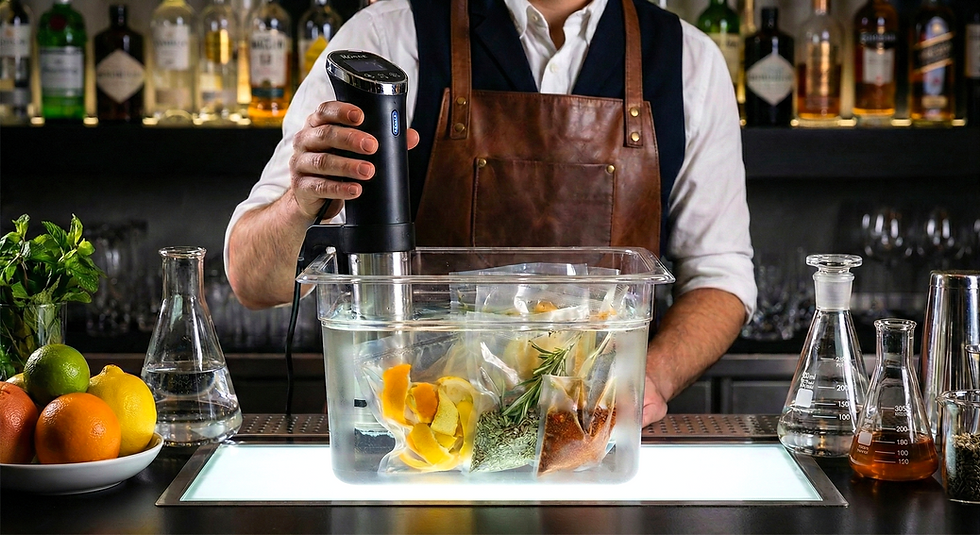
Place the mint and sugar in a vacuum bag or another sealable prep bag.
Vacuum seal, or press out as much air as possible if using a standard sealable bag.
Keep in the fridge for 24 hours.
After 24 hours, add the vodka.
Reseal and gently work the bag so the sugar starts dissolving evenly.
Keep in the freezer for another 24 hours.
Strain out all solids.
Fine-strain again for a cleaner and more stable result.
Bottle and keep chilled.
Best used for: Highballs, spritz-style serves, or mint-forward house signatures where the base sweetness is already accounted for.
Garnish standard: Not applicable for the prep itself. In service, a fresh mint sprig is the cleanest garnish if the final drink benefits from extra top aroma.
Dilution and temperature notes: Use the finished prep well chilled. Because this base already includes sugar, reduce extra syrup in the final cocktail until the balance is checked. If the final serve feels too intense, adjust dilution in the drink, not in the whole batch.
Tasting notes: Bright mint on the nose, soft sweetness through the mid-palate, and a clean finish. With vodka, the mint reads clearly and directly. It feels cleaner than a shochu version, but less layered.
Batching or prep notes: Start with one test batch before scaling. If the result tastes too grassy, shorten the contact time slightly or reduce the mint load in the next round.
Shelf life: Mint-washed vodka should be treated as a very short-life prep. For the safest quality standard, keep it well chilled and use it within 48 to 72 hours after fine-straining. If the aroma starts to fade, the mint turns grassy, or the liquid becomes cloudy, discard it earlier.
Ingredient substitutions and acceptable swaps
Vodka: a clean, neutral vodka at 37.5% to 40% ABV is the safest starting point.
Mint: spearmint is the easiest choice for a round, familiar profile. Peppermint can feel sharper and cooler.
Sugar: white caster sugar keeps the flavor cleaner. Standard granulated sugar can work, but may dissolve more slowly.
Where mint washing works best
Mint washing performs best in drinks where mint matters, but speed and clarity matter too.
It works especially well for:
Mojito-style highballs
Southside-style drinks
mint-forward spritzes
pre-batched house signatures
light seasonal serves where a clean herbal note is more useful than visible mint pieces
It is less useful in drinks that depend heavily on the immediate top-note burst of freshly handled mint during service. In those cases, mint washing can support the build, but it should not replace the final aromatic lift.
Want drinks like this built for real menu use?
The Double Strainer develops service-ready cocktail menus designed for concept fit, consistency, and smoother execution.
Common mistakes and fixes
The result tastes bitter
This usually means the mint was overworked, left in contact too long, or strained badly. Use gentler handling, shorter contact time, and cleaner filtration.
The mint tastes too grassy
This often comes from damaged leaves, warm extraction, or too much mint for the amount of liquid. Use fresher mint, keep the process cold, and reduce the mint load in the next test.
The mint flavor feels weak
The mint may have been old, the contact time too short, or the base too dominant. Start with better mint and test a slightly longer contact time before changing the whole method.
The liquid looks murky
This is usually a filtration issue. Fine-strain again. If needed, run a second slower filter.
The final cocktail becomes too sweet
If the mint wash includes sugar, it is already carrying sweetness. Reduce any additional syrup in the final drink before judging the balance.
Do and do not
Do
Work cold
Use fresh mint
Taste in stages
Fine-strain carefully
Adjust sweetness in the final cocktail
Do not
Over-muddle or blend into pulp unless that texture is intentional
Assume more time means better flavor
Ignore leaf quality
Leave solids sitting in the finished batch
Scale up before the small version works
If you want to go deeper
The next step is not more mint. It is better extraction logic. For deeper study, the most useful follow-up reading sits in the Techniques section and the Ingredients section, especially on infusions, washing methods, and aromatic prep.
FAQ
Is mint washing the same as muddling?
No. Muddling happens during the build. Mint washing happens before service as a separate prep step.
Is mint washing the same as mint infusion?
Not exactly. Mint washing sits inside the broader family of mint infusions, but it is usually discussed as a more service-focused and bar-practical approach.
Can vodka be used instead of shochu?
Yes. Vodka creates a cleaner, more neutral base. It is easier to understand, but less distinctive.
Does mint washing replace garnish?
Not always. A mint-washed base gives integrated flavor, but fresh garnish can still improve top aroma.
Is it useful for home bartenders?
Yes. It often works very well at home because it turns a messy service step into a controlled prep task.
Why does the term “washing” confuse people?
Because bars also use “washing” for techniques like milk washing and fat washing. Mint washing is different. It is best understood as a controlled herb extraction.
Glossary
Extraction: moving flavor or aroma from an ingredient into a liquid.
Infusion: soaking an ingredient in a liquid to transfer flavor.
Oleo: a sugar-led extraction that pulls aromatic compounds from an ingredient.
Fine-strain: filtering through a very fine strainer to remove small solids.
Oxidation: flavor and color change caused by exposure to air.
Batching: preparing part or all of a drink before service.
Fortified wine: wine with added spirit, such as many vermouths.
Clarification is not just about making drinks look clear.
The Clarification & Filtration Masterclass teaches how to choose the right method, protect flavor, improve texture, control yield, troubleshoot cloudy results, and build repeatable prep systems for real bar service.
Explore more practical extraction, prep, and service methods in the Techniques section
Join The Double Strainer Newsletter and get the free Bar Essentials guide.
Practical tools for better prep, smarter batching, and cleaner service.
Written by: Riccardo Grechi | Head Mixologist, Bar Consultant & Trainer


Comments